
Abstract
What does it take to be authentic and to have integrity in a digital world? In an increasingly artificial digital world? These were some of the tricky questions I was posed as part of preparing a talk on 'digital integrity' for a group of young adults.
Key takeaways
- We are called to evangelise the "Digital Continent" - but there is quite a contrast between's Pope Benedict XVI's optimistic 2009 call and the modern environment
- AI - as in Ancient Intelligence - can guide us to learn The Seven Habits of Highly Digital Saints:
- Respect the Statio (St Benedict): Create intentional pauses, or "thresholds," before engaging with technology. This includes keeping phones out of the bedroom and dedicating the first and last eight minutes of the day to phone-free activities like gratitude or prayer.
- Own the Journey (St Thomas More): Prioritise the process of genuine learning over the instant gratification of AI-generated answers. Use technology to augment, not replace, critical thinking.
- Choose Your Tools (St Joseph): Be a deliberate craftsman. Audit and delete distracting apps and use dedicated devices (e.g., a Kindle for reading) to minimise distractions.
- Master the Instrument (St Augustine): Drawing a distinction between use and enjoyment, technology should be used as a tool directed towards a higher purpose (God), not loved as an end in itself, lest we become enslaved by it.
- Tend the Interior Garden (St Teresa of Ávila): Actively curate your digital environment. "Weed" out negative feeds, "plant" positive "seeds" (like faith-based apps), and erect "fences" (like app blockers) to protect your inner life.
- Invite the Advocate (St Thomas Aquinas): Instead of engaging with weak "straw man" arguments, seek out the strongest opposing viewpoint (the "steel man"). Sit with the discomfort of differing ideas to form a more robust, well-reasoned stance.
- Ring the Digital Angelus (St Faustina): Use technology to create intentional moments for prayer and reflection. Customise notifications and focus modes to transform digital "pings" into purposeful reminders, rather than distractions.
Talk overview
Slide 6: Defining integrity
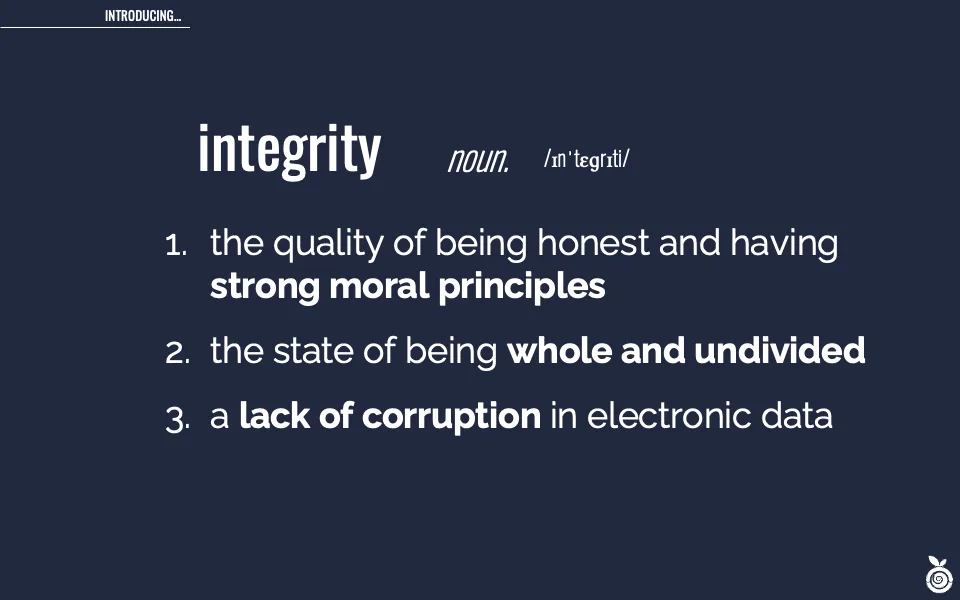
When writing this talk, I started where I often like to start: the dictionary. Mainly because I think we often use words and don't really think about their meaning. In the case of 'integrity', I like how the definition calls out three aspects: moral honesty, being whole and undivided and data integrity. And all three are relevant when thinking about digital integrity.
Slide 7: The Digital Continent divider
Now armed with our definition of integrity, let's start to explore the digital side of things.
Slide 8: 1993 - nobody knows you're a dog
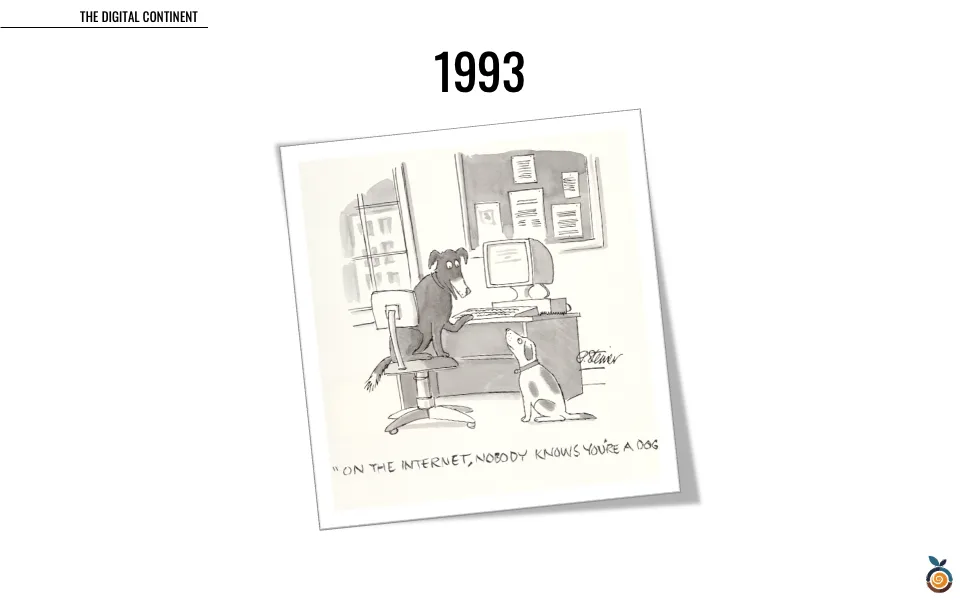
This classic cartoon from the New Yorker in 1993 summed up the beginning of widespread use of the internet. In those early days of 'cyberspace', the focus was on anonymity.
Slide 9: Benedict XVI on evangelising the continent
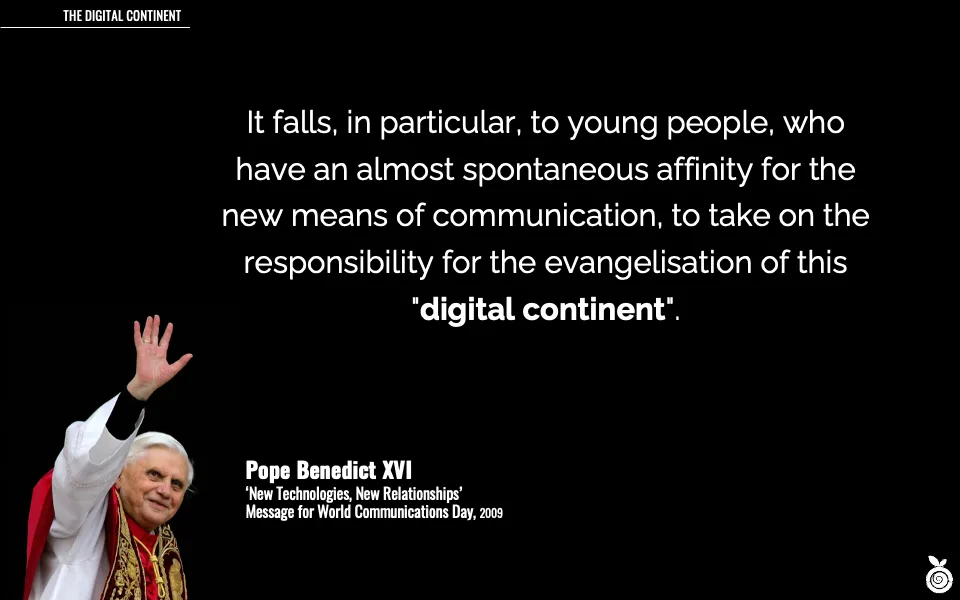
But Pope Benedict saw things differently. He called out that we are venturing into a 'digital continent', and he reminded everyone - particularly the youth - that the Church has a mission for us here.
Slide 10: 2009 - Benedict on Twitter
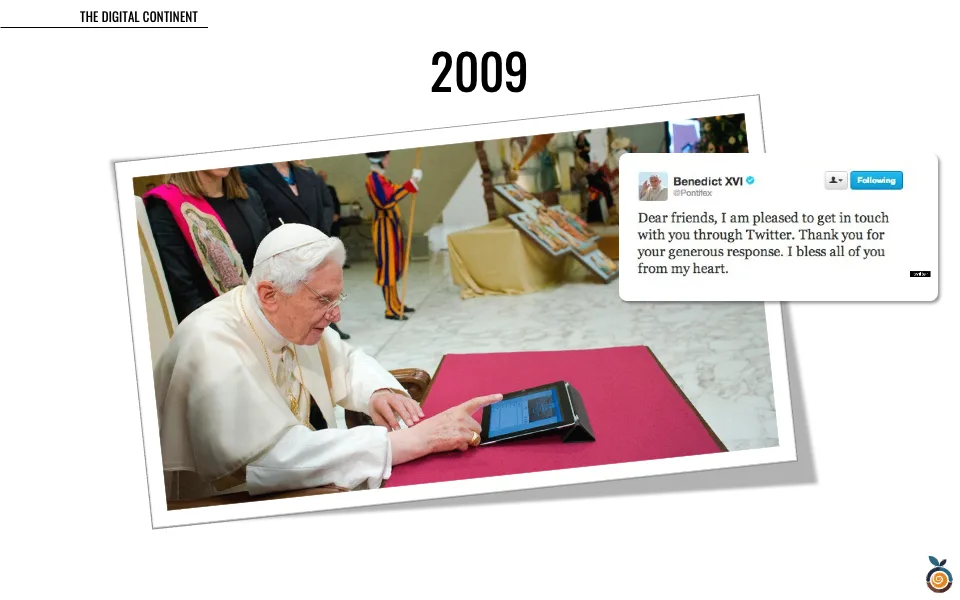
Even the first papal tweet carried a pastoral intent and was so refreshingly positive and polite. So hopeful that this is how the digital continent would turn out: that it would enable connection and understanding and evangelisation.
Slide 11: What does the continent look like now?
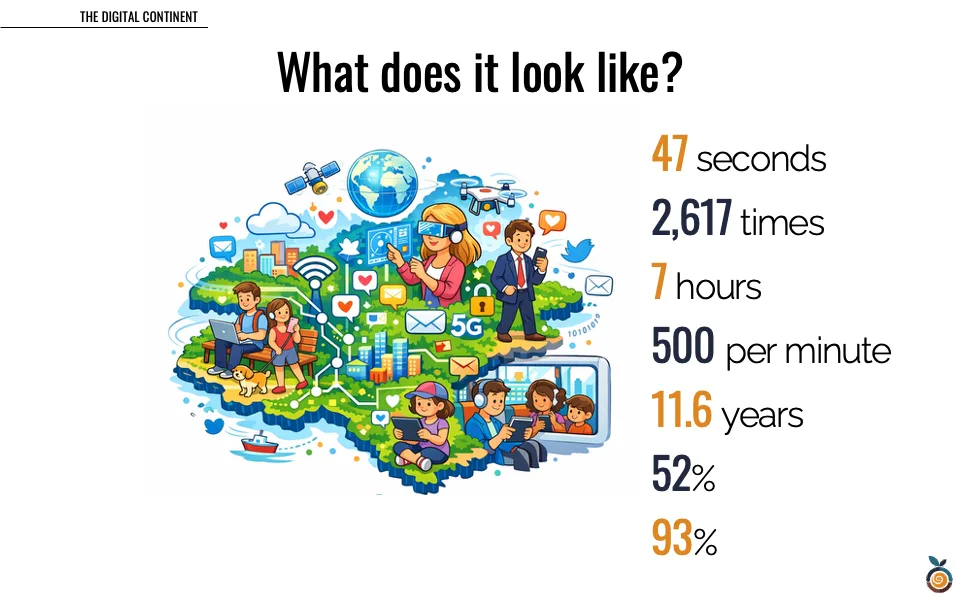
I asked AI to generate a picture of the digital continent, and this is what it came up with. But the reality is not quite as utopic.
- We are now only able to stay on task for 47 seconds at a time
- On average, we touch our phones 2,617 times a day.
- The average person spends 7 hours on a screen a day, with 500 hours of YouTube uploaded every minute.
- The average age of first smartphone: 11.6 years.
- 52% of all new content in 2025 was generated by AI, and US teenagers are on track to spend 93% of their lifetime free time online.
Slide 17: John Paul II - do not fear technology
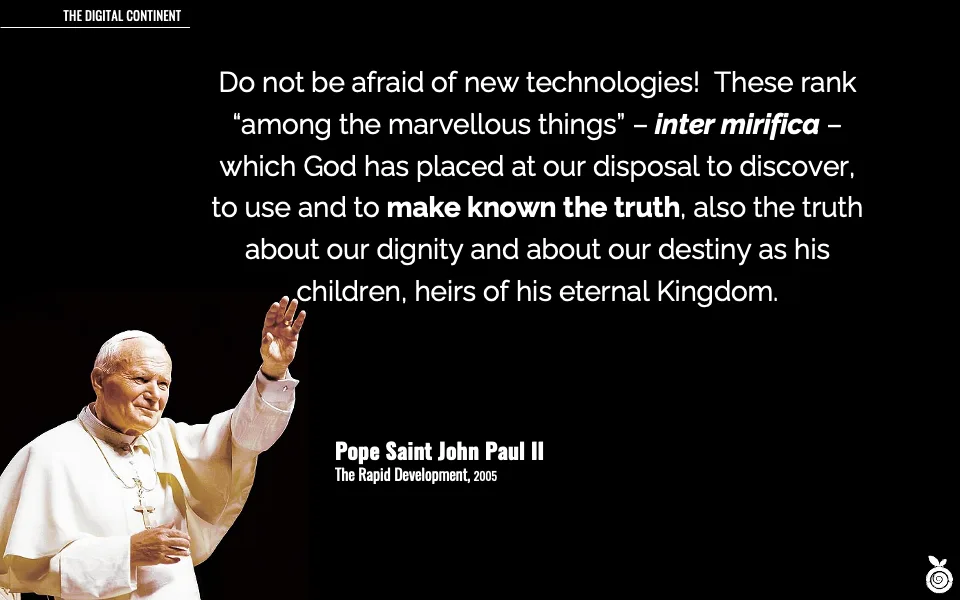
But we need not be afraid! As St Pope John Paul II pointed out: new technologies can serve truth and dignity when rightly ordered.
Slide 18: St Paul - called in every place
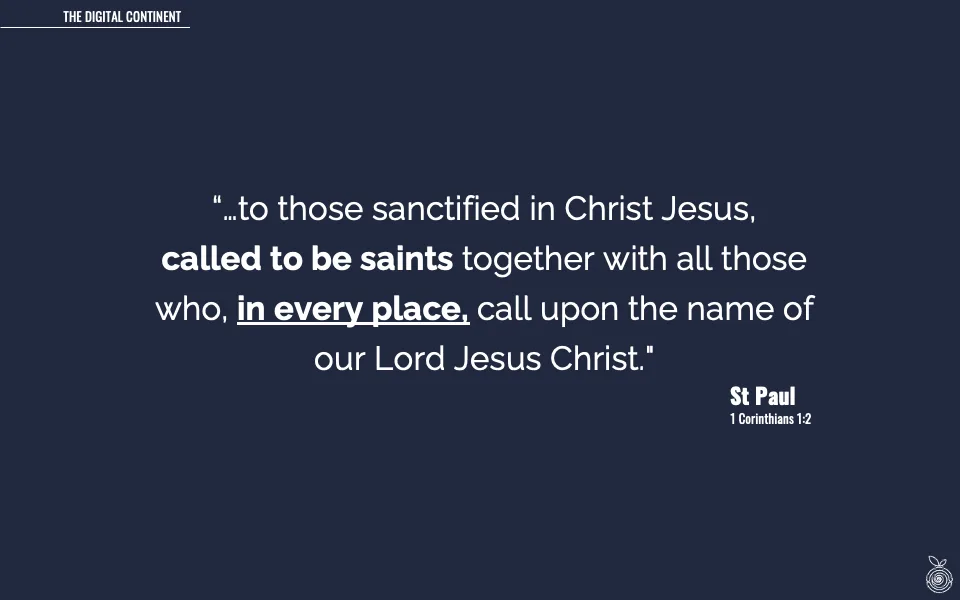
I like to reflect on this quote from St Paul. Notice that the word saints is lowercase 's'? This is not capital 'S' Saint, where you go through all the process of canonisation and everything else. We are all called to be saints, lowercase 's'.
And the second part I draw your attention to: "in every place". So that includes in the digital continent. And that's the way I like to think about digital integrity. It's a call for all of us to be saints, but in a world that is not very saintly by default.
Slide 19: Artificial intelligence
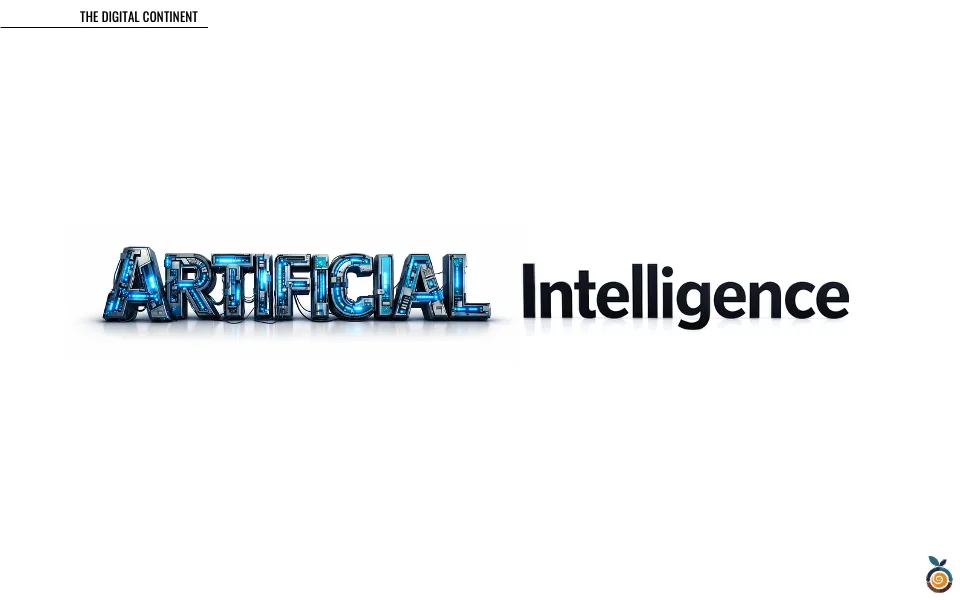
How? How do we do that? Well, I think AI has the answer.
Not "artificial intelligence"...
Slide 20: Ancient intelligence
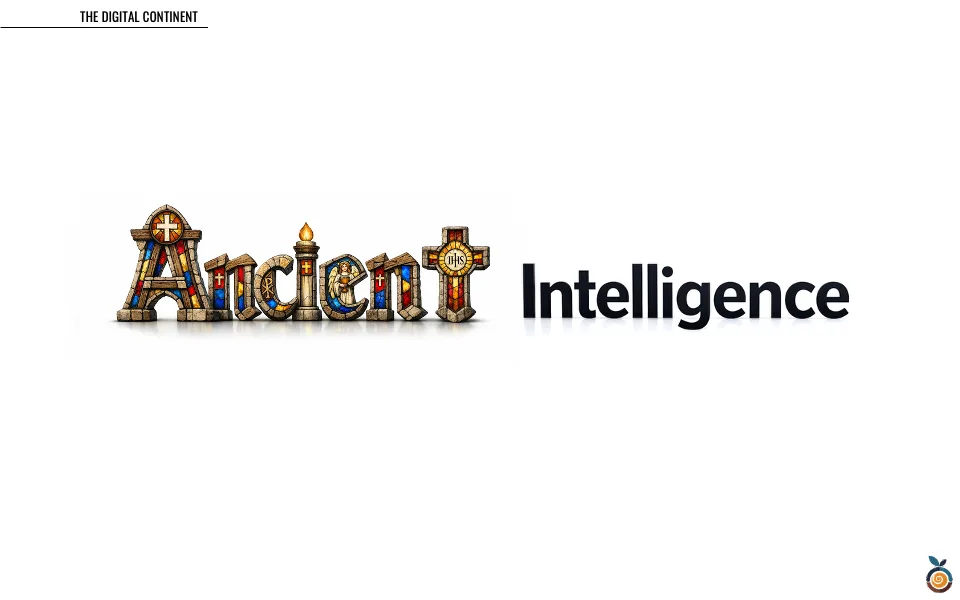
...but "ancient intelligence".
If we are called to be saints, maybe we should learn from Saints?
Slide 21: Seven Habits divider
In fact, I think we can learn seven habits that can help with forming and reinforcing digital integrity.
Slide 22: Covey reference point
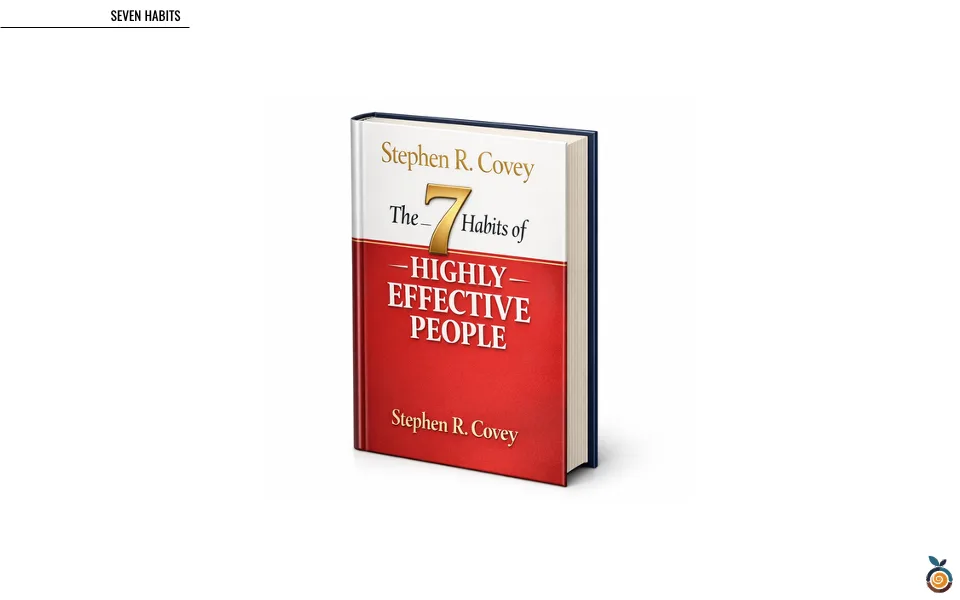
Stephen Covey's very famous 1989 book explored "The Seven Habits of Highly Effective People." He wrote it at a time where he saw a need to shift from temporary success techniques to foundational integrity in business.
Slide 23: The 7 habits of highly digital saints

This got me thinking: what might "The Seven Habits of Highly Digital Saints" be? That book doesn't exist (yet), but I think we can learn from the ancient intelligence of the Saints and see what we can come up with.
Slide 24: Habit overview list
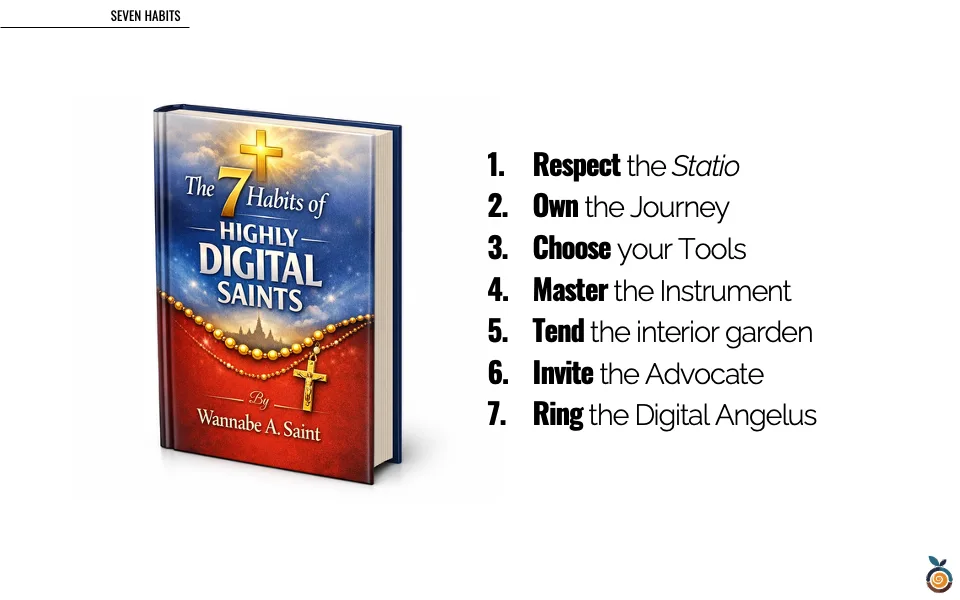
Here's the full list up front so everyone has a map before we dive into each one.
Slide 25: Habit 1 - Respect the Statio
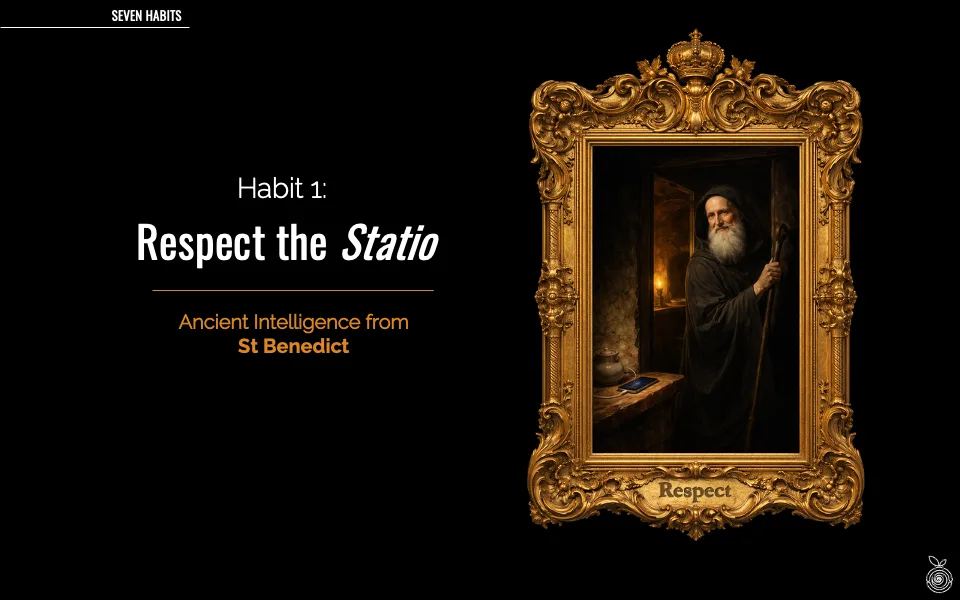
Let's start with St Benedict. (That's his phone charging in the kitchen there, away from his bedside.) St Benedict was very well known for setting rules for monastic life. The statio is the threshold between tasks, the pause between finishing one task before rushing into the next thing. And so that got me thinking: can we create this space not just between our tasks, but between us and our technology?
Slide 26: Create boundaries
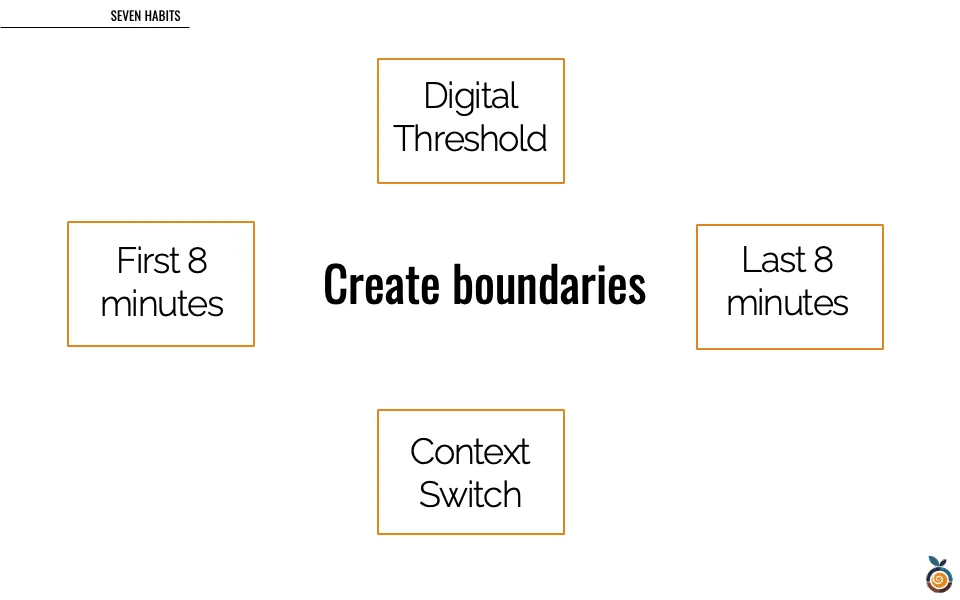
What does this look like? Well, by creating boundaries:
- creating digital thresholds (like charging your phone in your kitchen)
- reducing 'multitasking' (which is just fast context switching)
- protecting the first eight minutes of the day as pointed out by the amazing Chelsea Pottenger with no screens and a simple prayer of gratitude
- and also protecting the last eight minutes of the day. Recollecting, doing an examination of your conscience, a small prayer of thanks and... no screens.
Recent research has pointed to the fact that if you pause between your scrolls, you are less likely to keep scrolling. The mechanisms are built into just encouraging endless scrolling and mindless activity. But if you respect the statio it can help break that spell.
Slide 27: Habit 2 - Own the Journey
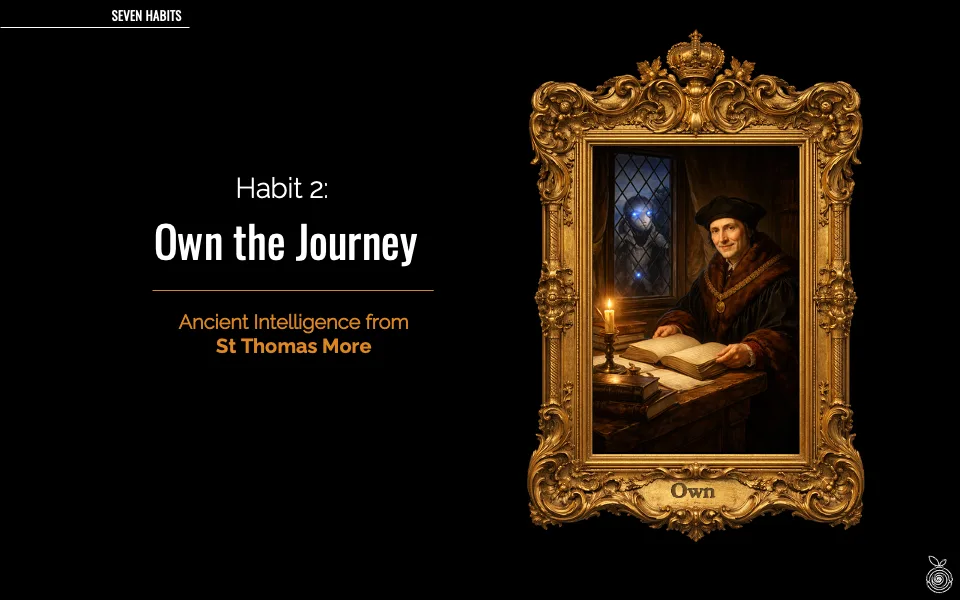
This second habit we learn from St Thomas More. He was an incredible man: by all accounts an amazing legal mind, a loving father and husband, and a loyal friend. And you can see in my image here, AI is out in the cold. That's because St Thomas placed a high premium on the learning journey. Not just learning to seem smart - really learning.
Slide 29: Francis on AI and human aspiration
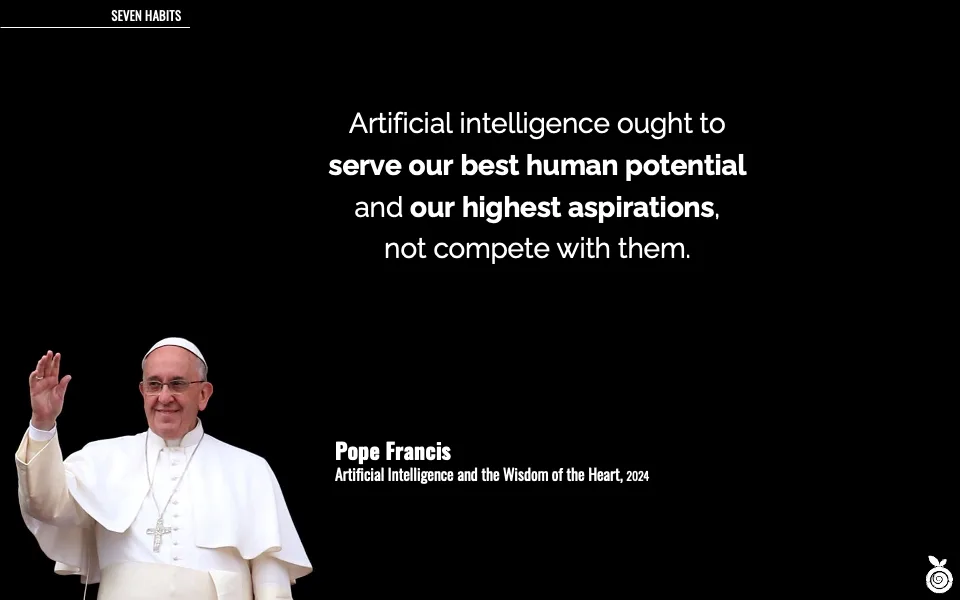
With AI the temptation can be to skip straight to the answer. But this quote from Pope Francis gives us the core principle: AI should serve our best human potential and highest aspirations, not compete with them. So using it to augment my learning, not replace it is critical. Using it to add to what I can do, not to cheat myself or my teachers or my employer.
Slide 30: Humans in the loop, humans at the heart
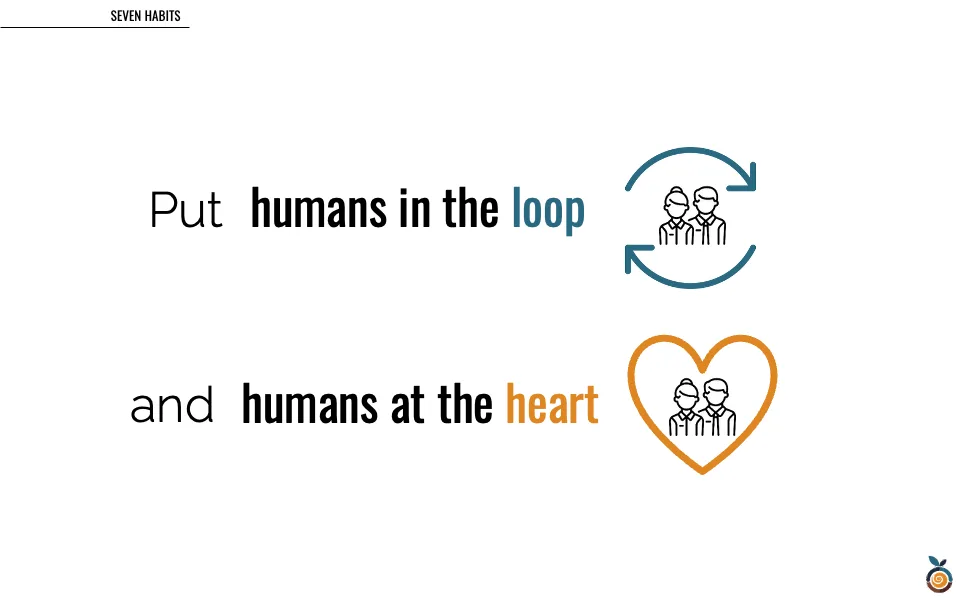
You may have heard about 'humans in the loop', a term from AI governance about making sure humans review the work of AI and are involved in critical processes. But I think there are some processes where the answer is to place humans at the heart of the process. Places that are not the domain of AI at all.
Slide 31: Habit 3 - Choose your tools
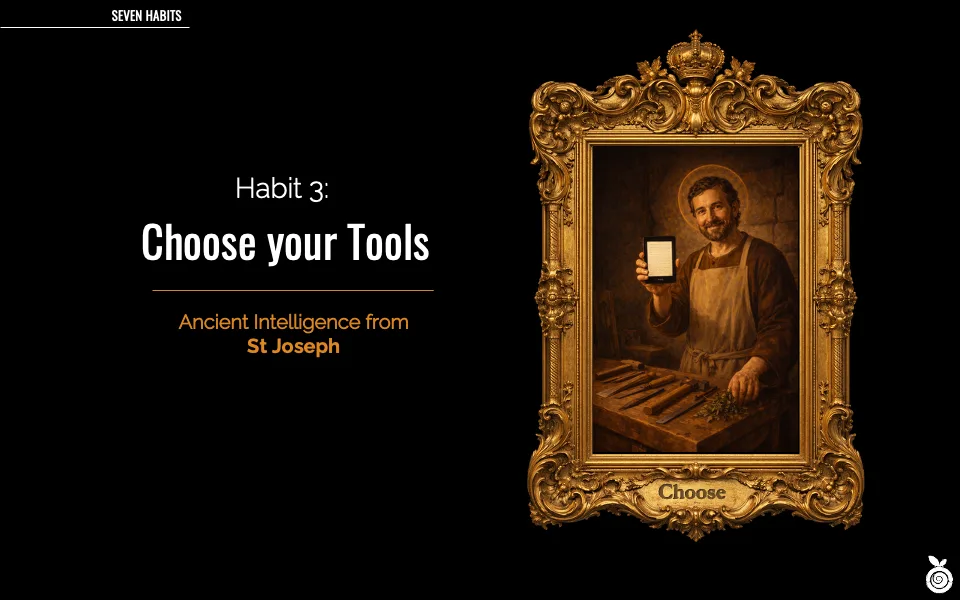
For the next habit we can learn from none other than St Joseph. He was a craftsman, and someone who would have taken pride in using the right tool for the right job. While I don't think he ever actually owned a Kindle, hopefully you can see where I'm going with this.
Slide 32: App audit, deliberate devices, tidy toolshop
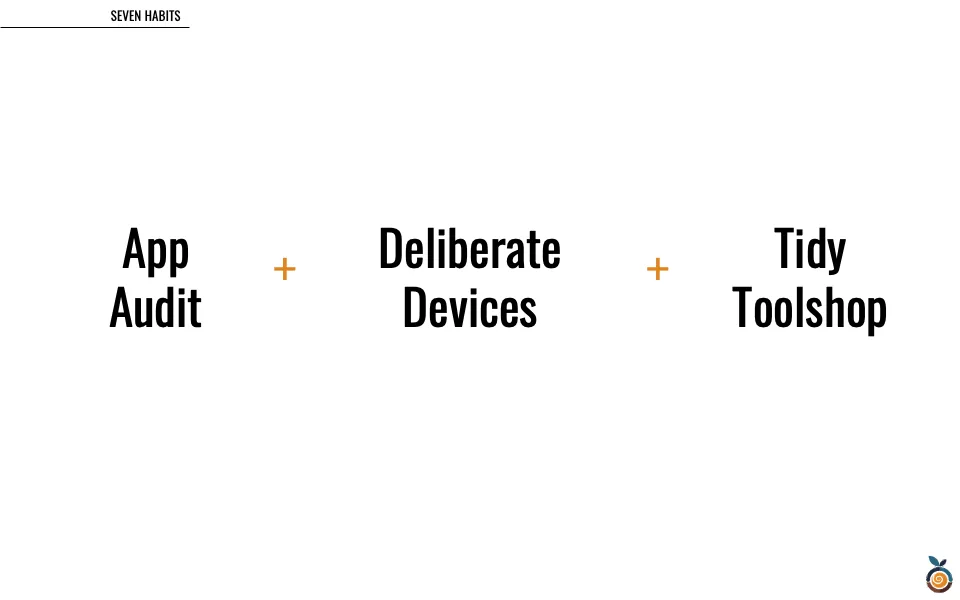
- Are you auditing your apps? Or are some of them a bit rusty and they need to go?
- Are you using your devices, deliberately? My image has St Joseph using a Kindle - a device specifically for reading. Just because you have a supercomputer in your pocket, doesn't mean you need to use it for everything.
- Are you thinking about where you use which tools for which task? A study for studying, an office for working.
Slide 33: Habit 4 - Master the Instrument
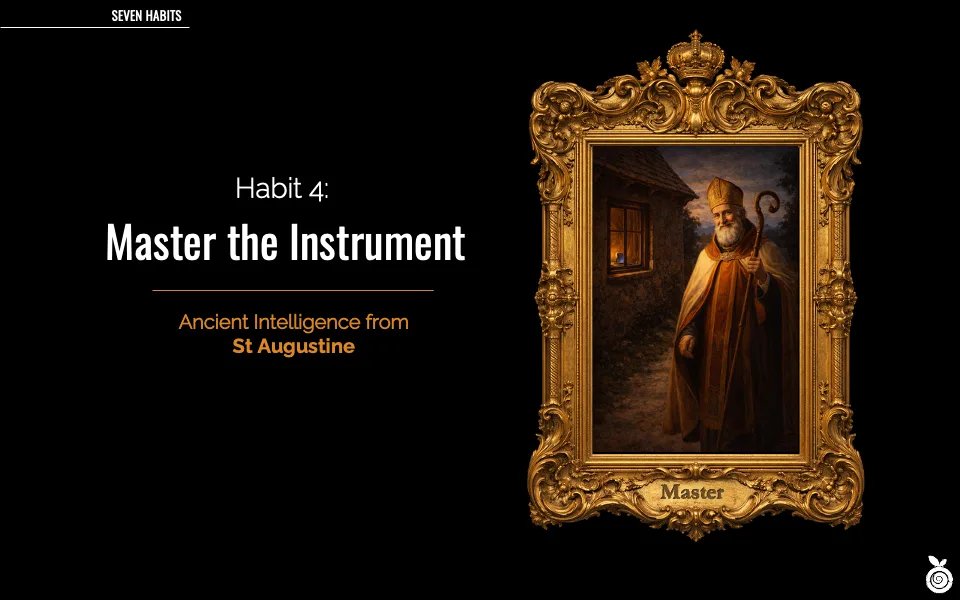
Then we can move to the next habit and learn from another intellectual powerhouse: St Augustine. Here he is going for a walk leaving his phone behind. Because he was very clear that instrument should serve a purpose, not be a purpose in itself.
Slide 34: Use and enjoy - Uti vs Frui
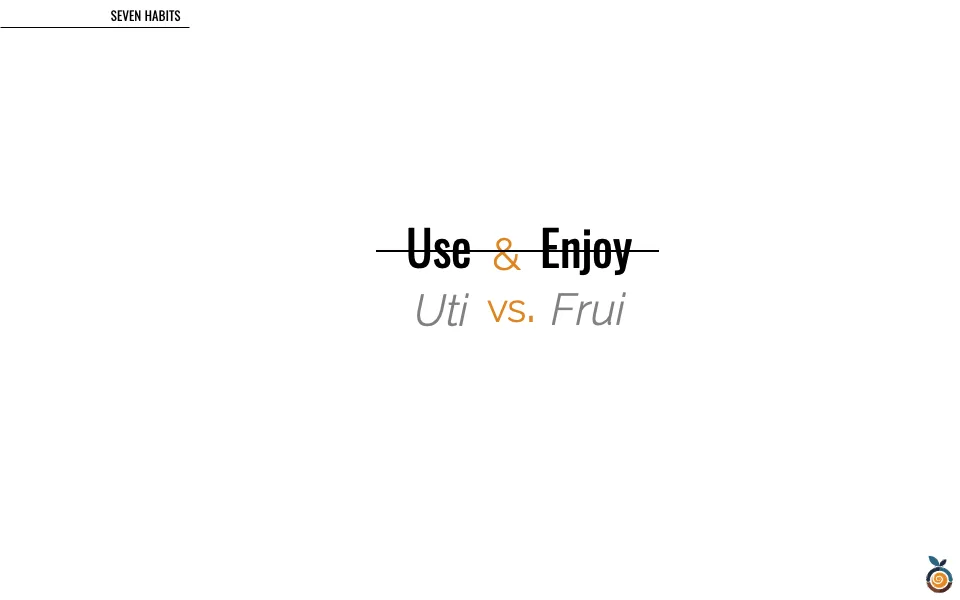
He talked about uti and frui which contrasts with the common phrase "use and enjoy". He would say that tools are for use; ultimate enjoyment belongs to and in God. So don't let the instrument master you. Leave your devices behind sometimes. Take a break. Give them up for Lent.
Slide 35: Habit 5 - Tend the interior garden
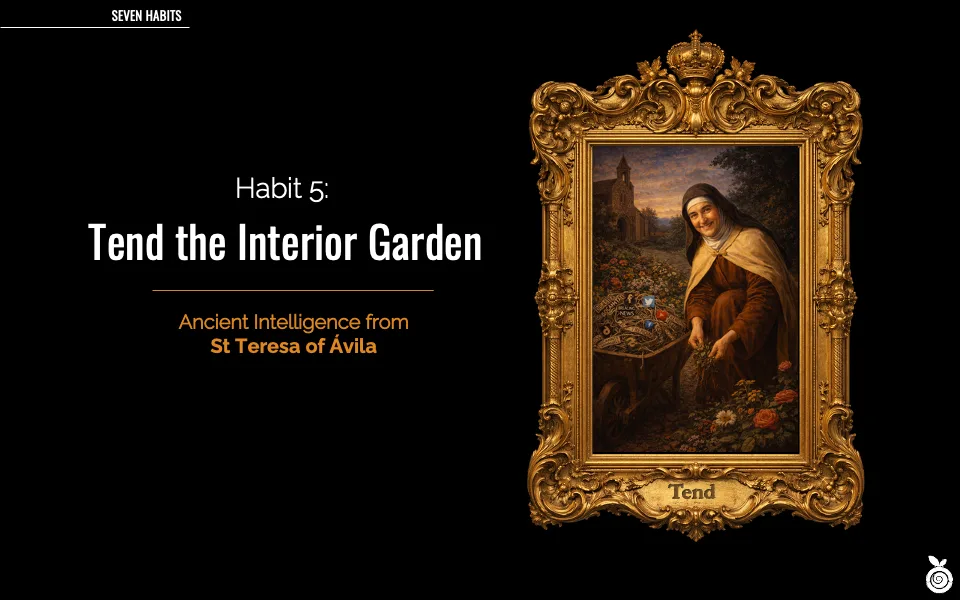
Then we can turn to the wonderful St Teresa of Ávila. She spoke beautifully of the soul being an interior castle and also an interior garden. As with any garden, it's important to tend to the condition of your soul and think about how you are feeding and watering it.
Slide 36: Weeds, seeds, and fences
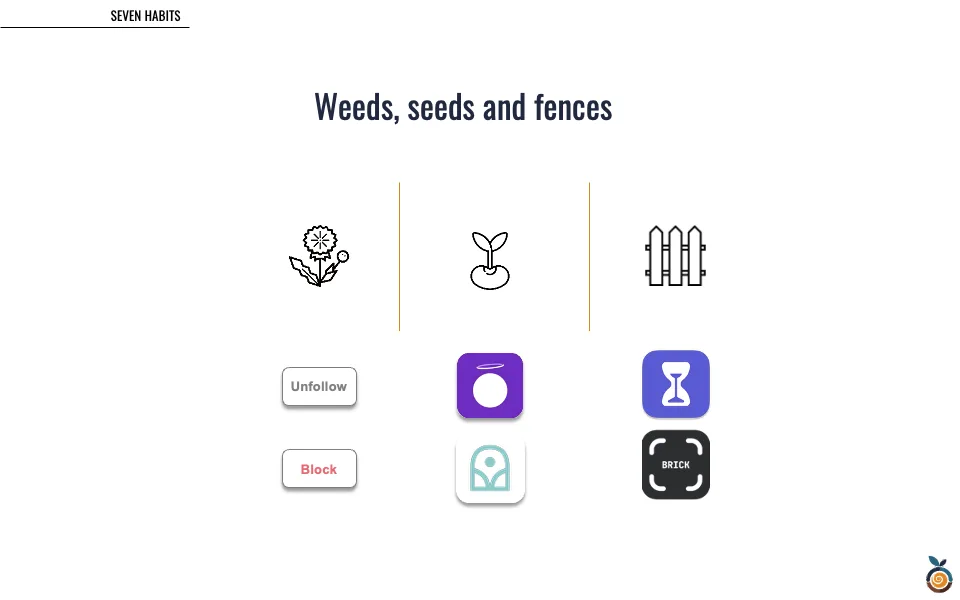
- Pull weeds: unfollow those negative accounts on social media, and block where you have to block
- Plant seeds: look at apps like Hallow and Pray As You Go to set your garden up to bear the right fruit
- Build fences: using Screen Time and apps like Block to give you the extra help you need to keep things in order.
Slide 37: Habit 6 - Invite the Advocate
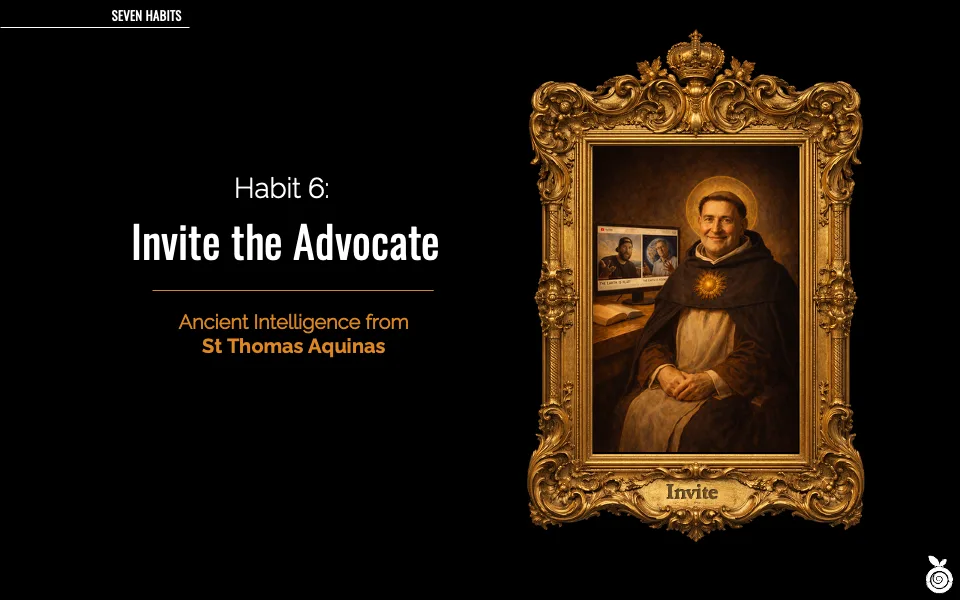
For the next habit we turn to another Thomas - St Thomas Aquinas. He was famous for really wrestling with competing arguments - like those YouTube videos in the background there.
Slide 38: Wrestle with the discomfort
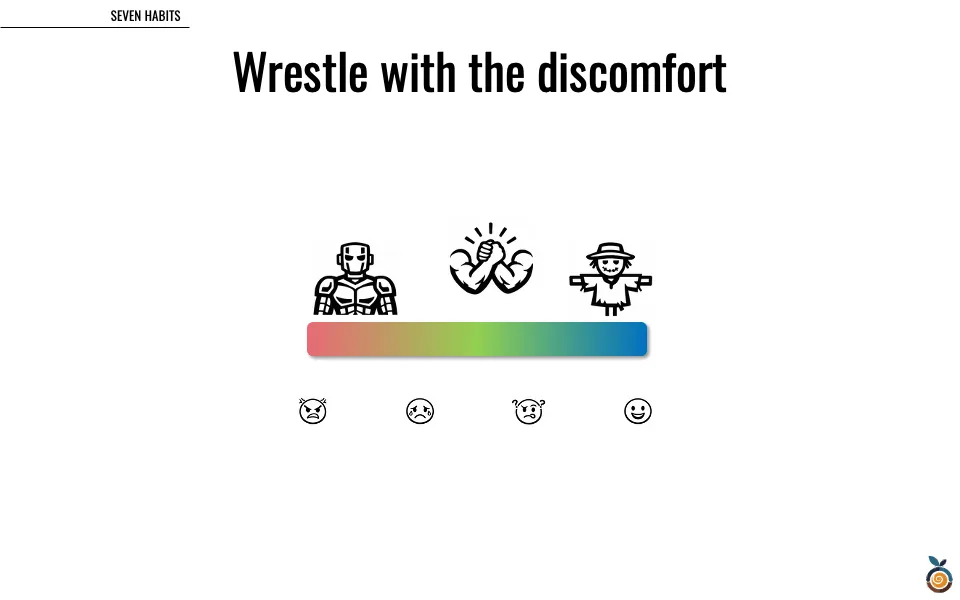
In fact, he would only state his side of an argument once he could state his opponent's side better than they could. He wouldn't just argue with the 'strawman' weak version of the argument - he would seek out the 'steelman version. This means sitting in the discomfort of having an idea that is contrary to yours.
Slide 39: Snake and dove tension
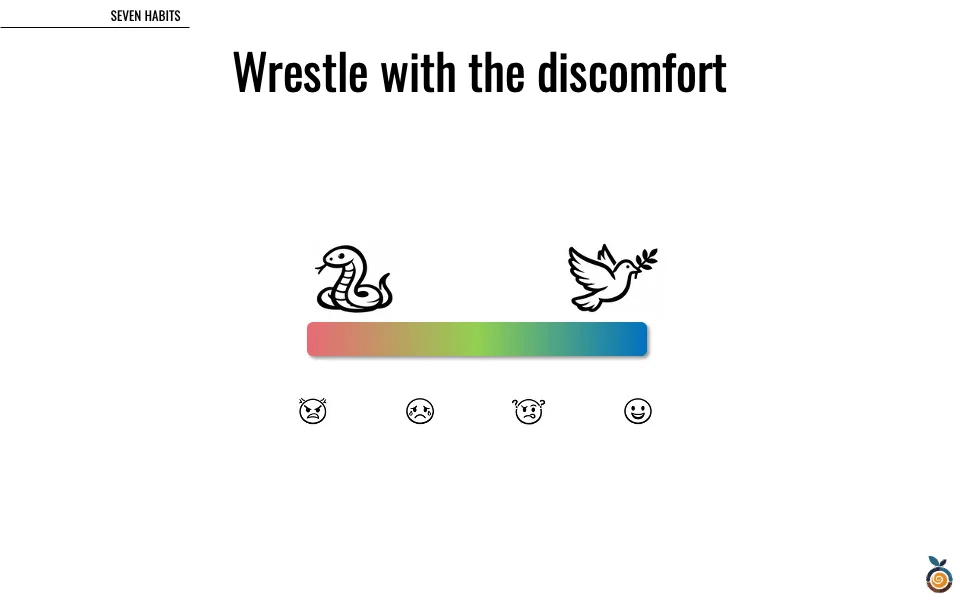
The Church uses the role of "devil's advocate" when assessing sainthood - i.e. putting forward the strongest argument against someone's canonisation. Compare that to the voice of the ultimate Advocate, the Holy Spirit. Listen to what the Spirit says when you discern what you believe between two opposing views.
Slide 40: Habit 7 - Ring the Digital Angelus
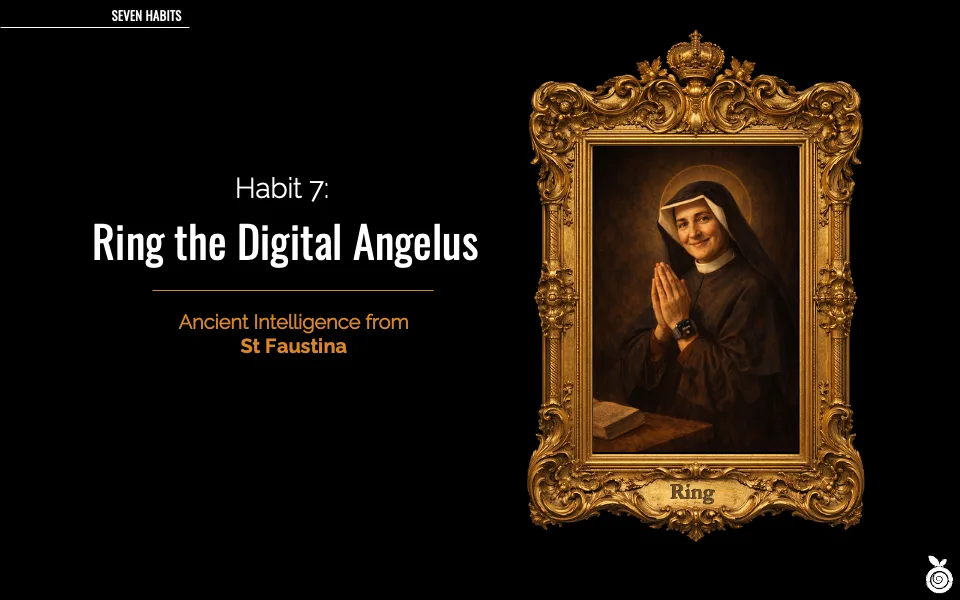
For the final habit we turn to St Faustina, who gave us the gift of the Divine Mercy and who is famous for stopping every day at 3pm for prayer. A great idea, and you can see her smartwatch alerting her there, but reminders to pray during the day used to be relatively commonplace.
It was the norm for church bells to ring in the middle of the day, for example, to remind everyone to pause and say the angelus - hence the idea of ringing the 'digital angelus bell' as a way of bringing this practice into modern life.
Slide 41: Look familiar? Notification overload
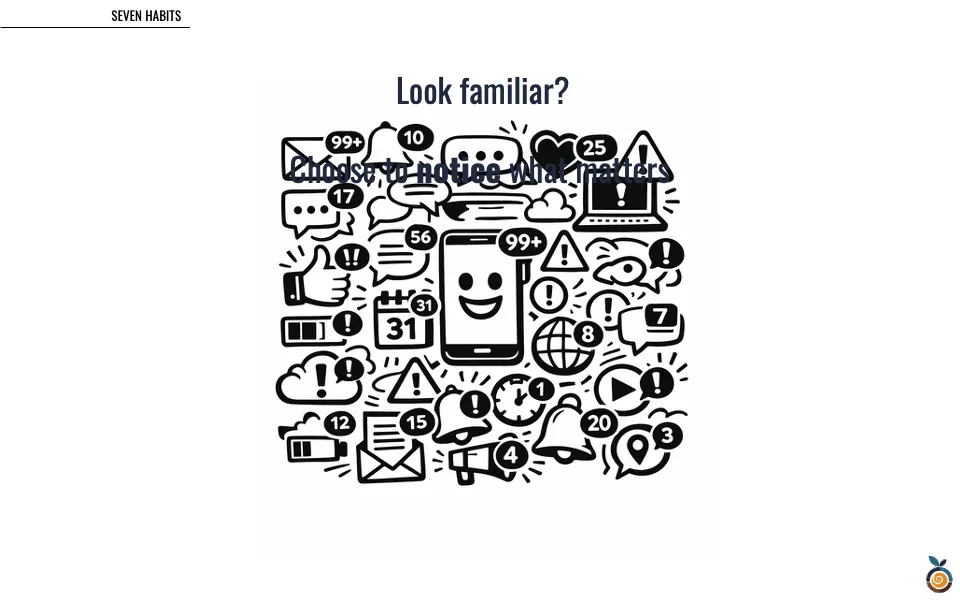
What can we learn from this? How often do our notifications get lost in the craziness of alerting us to everything and anything.
Slide 42: Choose to notice what matters
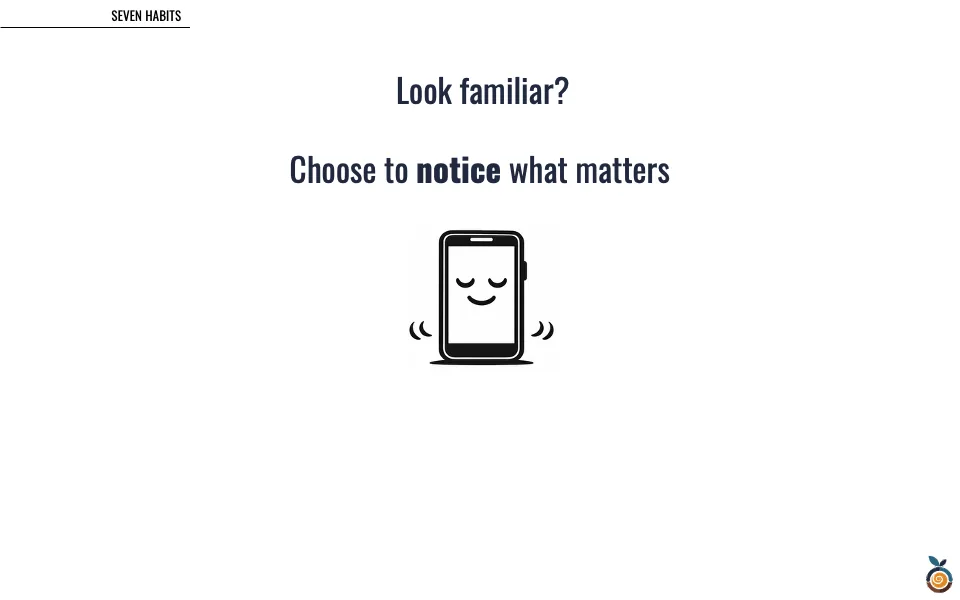
Instead, be selective with your notifications - and choose what to be alerted to. Maybe even set some alarms to get you to pray in the middle of the day?
Slide 43: The seven habits together
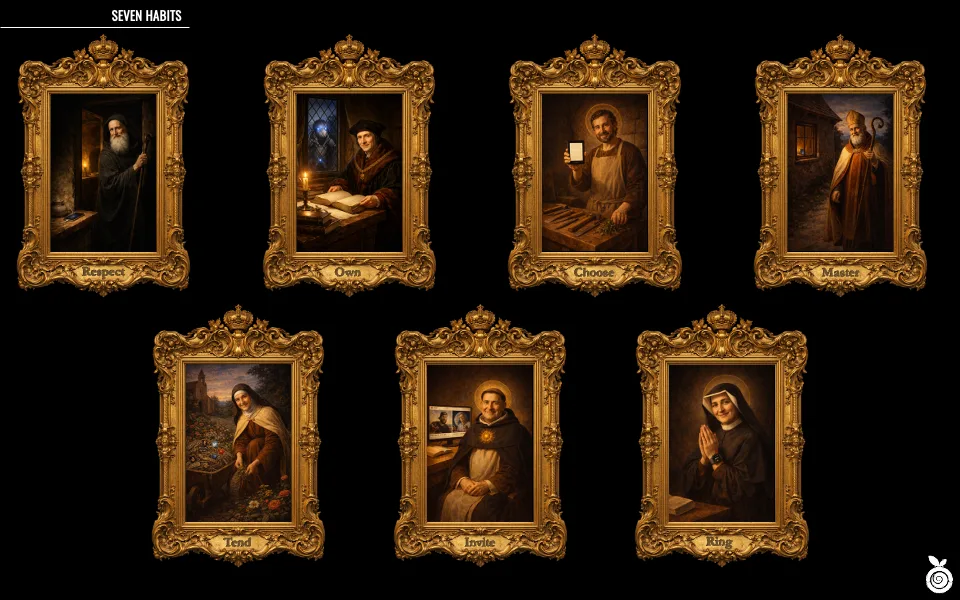
So, those are what I think are "The Seven Habits of Highly Digital Saints". I would not say that it is a good idea to go out and try and do establish seven of these all at the same time, though. If we want to be saints, it is about establishing these habits one-by-one until they are embedding in our daily lives. The point with habits is to continue to refine them, continue to embed them. Not just give it up one day, but to keep coming back and forming good habits - habits that help with creating that space and being conscious and cogniscent as you live on the digital continent.
Slide 44: Co-workers in creation
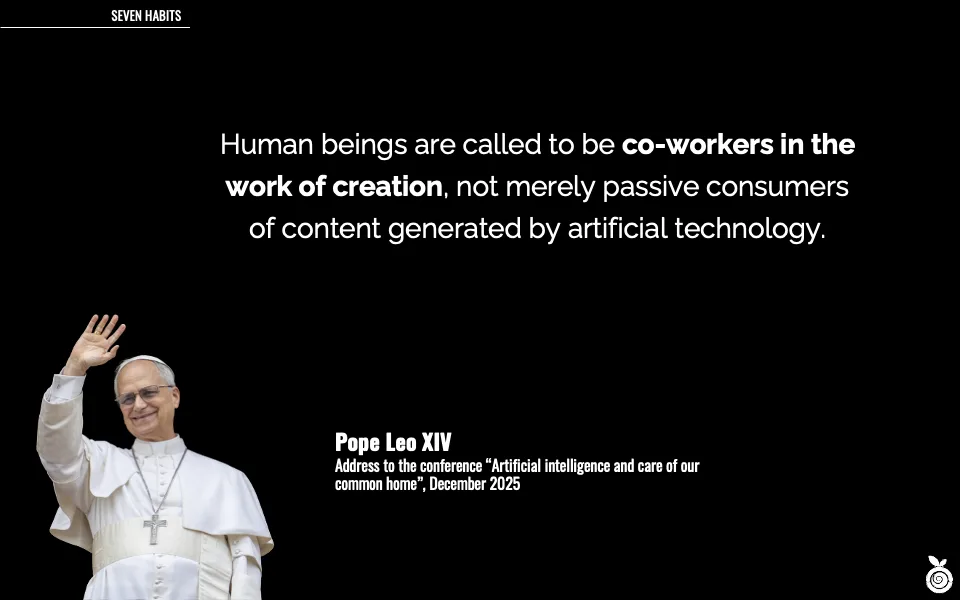
To close with Pope Leo: we are not called to be passive consumers of AI content; we are called to be co-workers in the work of creation.